As the bakery industry evolves, choosing the right Dough Mixer Machine becomes crucial for success. Esteemed industry expert, Chef Michael Turner, emphasizes, "The right mixer can transform dough quality immensely." With advancements in technology and changing consumer preferences, buyers face a myriad of options in 2026.
Dough Mixer Machines are not just mechanical devices; they are pivotal in crafting perfect bread and pastries. High-quality mixers enhance dough consistency and save time. Yet, with so many models on the market, selecting the ideal machine can feel daunting. Many buyers struggle to balance quality and affordability.
The landscape of Dough Mixer Machines is ever-changing. New features emerge, and innovations reshape the market. To stay ahead, buyers must consider factors like their production needs, budget, and the mixer’s durability. Thoughtful selection can lead to improved efficiency and product quality in the long run.
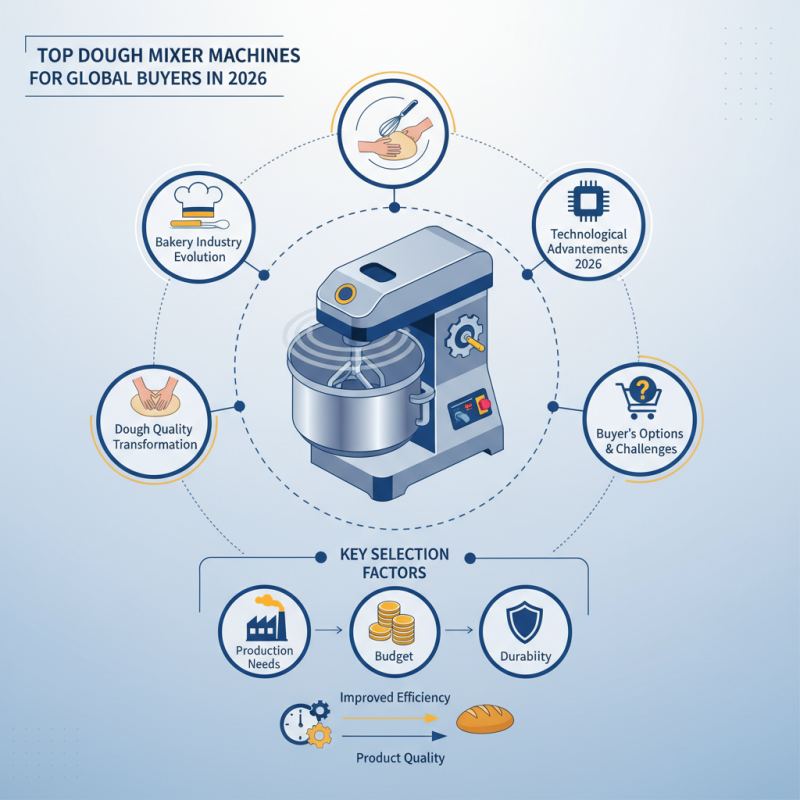
The dough mixer machine market is evolving rapidly. Global buyers in 2026 will face new trends that reshape their choices. Key developments focus on energy efficiency and automation features. These machines aim to reduce energy consumption and enhance productivity, appealing to environmentally conscious consumers.
The rise of home baking has influenced the market significantly. Amateur bakers demand small, efficient models that take up less kitchen space. Advanced technology enables precision in mixing, ensuring consistent results. However, some machines may still struggle with larger batches. The balance between size and capacity remains critical for many buyers.
Innovation plays a vital role in shaping preferences. Buyers seek machines that incorporate smart technology. Features like connectivity and programmable settings are becoming standard. Yet, some consumers find these innovations overwhelming. They may prefer more straightforward options. This highlights the diversity in buyer needs and the room for growth in this competitive market.
When selecting dough mixer machines, global buyers should prioritize several key features to ensure they meet their needs.
One crucial aspect is the mixer’s capacity. Different baking operations require varying batch sizes. For small bakeries, a compact model may suffice.
However, larger operations need robust mixers with higher capacities.
Another important feature is the mixing action. Planetary mixers provide excellent results for doughs, while spiral mixers excel in handling thicker mixes.
Buyers should consider what types of dough they frequently work with. This can significantly impact the quality of the final products.
Ease of cleaning and maintenance cannot be overlooked either.
Machines that are tough to disassemble may pose hygiene issues in a busy kitchen.
Additionally, investing in durable materials is essential for long-term reliability.
Think about how often components need to be replaced.
All these details influence overall productivity. Reflecting on these factors will help ensure a satisfying purchase.
As the dough mixer machine industry evolves, several brands have emerged as leaders. These brands influence market trends with innovative technologies and high-quality machinery. They focus on user-friendly designs, helping bakers achieve perfect dough consistency. The emphasis is on efficiency and reliability, catering to both small bakeries and large-scale food producers.
Manufacturers continue to improve their machines. They integrate advanced features and enhance performance while maintaining a commitment to sustainability. Some machines now use energy-efficient motors and environmentally friendly materials. This shift reflects a growing concern for reducing the carbon footprint in the culinary sector.
Consumer feedback plays a crucial role in shaping these advancements. Many users express the need for machines that are easy to clean and maintain. Durability is also a top priority; buyers seek mixer machines that can withstand heavy daily use. Nevertheless, some models may not meet expectations, leading to discussions about reliability over time. This dynamic landscape encourages both manufacturers and users to reflect on their experiences, aligning their needs with ongoing technological improvements.
| Model | Mixing Capacity (kg) | Power (kW) | Features | Price Range (USD) |
|---|---|---|---|---|
| Model A | 30 | 5.5 | Stainless Steel, Digital Controls | 800 - 1000 |
| Model B | 50 | 7.5 | High Efficiency, Easy Cleaning | 1200 - 1500 |
| Model C | 15 | 3.0 | Compact Design, User Friendly | 500 - 700 |
| Model D | 20 | 4.0 | Energy Saving, Variable Speed | 700 - 900 |
| Model E | 40 | 6.0 | Programmable Timer, Safety Features | 900 - 1100 |
When selecting a dough mixer machine, performance and price are crucial factors for global buyers. The efficiency of a mixer can significantly impact production timelines. A machine with a powerful motor often achieves consistent and smooth dough. Meanwhile, lower-priced options may struggle to meet demand. Buyers need to balance these aspects for their specific needs.
Comparing various models reveals diverse features and functionalities. Some mixers operate quietly and are easy to clean, while others are bulkier but more efficient. It's essential to consider the machine's capacity and the volume of dough required. Users often report that higher-priced mixers tend to last longer. However, budget-friendly choices can work well for small operations.
It’s important to ask whether the investment matches the expected output. Evaluating customer reviews and expert opinions can help. Users sometimes underestimate the long-term savings of a durable machine. Finding the right dough mixer requires thorough research and reflection on the operational needs. What fits one bakery may not suit another.
The dough mixer technology is set to undergo transformative changes by 2026. Innovations in automation will play a significant role. These new mixers may feature advanced monitoring systems. They will offer real-time adjustments during the mixing process. Users can expect improved consistency in dough quality. Enhanced precision is essential for food production.
Sustainability will also influence design choices. Energy-efficient mixers could reduce operational costs. Furthermore, hygienic features may become standard. Easy-to-clean designs promote better food safety practices. However, challenges remain in integrating these innovations. Balancing cost with advanced technology is crucial.
User-friendly interfaces are another area of focus. These will simplify operation and troubleshooting. Educational resources will help users adapt to new systems. As the market evolves, training will remain vital. Overall, the future of dough mixers promises exciting advancements, but practical implementation will require careful consideration.
: Users prefer machines that are easy to clean, durable, and reliable for heavy daily use.
There is a shift towards energy-efficient motors and eco-friendly materials, reducing the carbon footprint.
Innovations like automation and real-time monitoring systems will enhance dough consistency and precision.
Feedback helps manufacturers understand user needs and improve product reliability and functionality.
Easy-to-clean designs are becoming standard to promote better food safety practices among users.
Yes, balancing cost with advanced features while ensuring user-friendliness is a common challenge.
Training will be vital to help users adapt to new systems and ensure proper machine operation.
Some new features may not meet user expectations regarding reliability and ease of use.
Durability is essential, especially for those who use mixers frequently in their baking processes.
No, there is a trend towards user-friendly interfaces to simplify operation and troubleshooting.
The article "Top Dough Mixer Machines for Global Buyers in 2026" provides a comprehensive overview of the evolving dough mixer machine market trends expected in 2026. It highlights the key features that global buyers should prioritize, such as efficiency, versatility, and user-friendly controls. As the demand for high-quality dough mixers increases, understanding the leading brands and their innovations will be essential for making informed purchasing decisions.
Additionally, the article compares various dough mixer machines based on their performance and pricing, allowing buyers to assess which models deliver the best value for their needs. Looking ahead, potential future innovations in dough mixer technology are anticipated to enhance functionality and improve user experience, catering to the growing needs of bakers and culinary professionals worldwide.

FSL Food