In the world of baking, efficiency and precision are crucial. A Dough Sheeter is an indispensable tool for bakeries striving for these qualities. According to David Baker, a renowned baking expert, "A Dough Sheeter transforms the production process, making it both faster and consistent." This highlights the essential role this equipment plays in daily operations.
Using a Dough Sheeter can significantly enhance dough preparation. It helps achieve uniform thickness and texture, which is vital for quality baked goods. Imagine the perfect croissant or pizza base—achieving that without a Dough Sheeter can be challenging. Many bakers, however, still hesitate to invest in this technology, fearing it may not fit their working style.
Exploration of the Dough Sheeter's potential raises questions too. Are there specific recipes that work better with its use? What about the learning curve for staff? The value it brings is often overshadowed by such concerns. Nevertheless, the long-term benefits speak volumes, making it worth the investment for bakeries aiming for excellence.
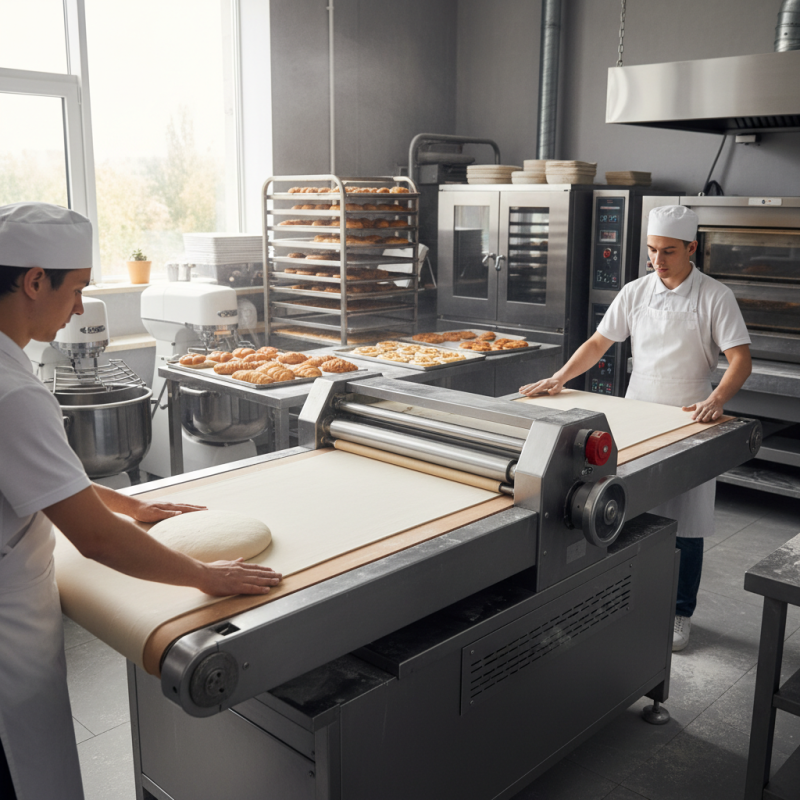
The Definition and Functionality of a Dough Sheeter in Bakeries
A dough sheeter is an essential tool in modern bakeries. It streamlines the process of rolling out dough, ensuring consistency in thickness and texture. This equipment operates by passing dough through adjustable rollers, making it easier to prepare products like pastries, pizza crusts, and breads. According to industry reports, bakeries that utilize dough sheeters can increase their production efficiency by up to 30%.
The functionality of a dough sheeter not only saves time but also reduces physical strain on staff. Workers can avoid repetitive motions, which often lead to injuries. Studies show that facilities that introduce mechanized tools often see improvements in employee satisfaction and retention rates. However, the initial investment in high-quality machinery can be daunting for small businesses.
Despite these challenges, the benefits of utilizing a dough sheeter are significant. Bakeries can achieve uniform results, essential for maintaining product quality. A consistent dough thickness helps with even baking and enhances the final product's texture. Yet, some bakers may struggle with calibrating machinery for different dough types. This adjustment period can be frustrating and may require ongoing training. Balancing technology with craftsmanship remains a vital consideration for many in the baking industry.
Types of Dough Sheeters Available in the Market Today
Dough sheeters play a crucial role in modern bakeries, simplifying the dough preparation process. They can produce consistent, uniformly rolled dough that enhances the quality of pastries and breads. In the baking industry, 73% of professionals cite efficiency as a major benefit of using dough sheeters. This efficiency can significantly increase production, allowing bakers more time to focus on creativity.
There are several types of dough sheeters available today. Manual dough sheeters are perfect for small bakeries, offering good control with a hands-on approach. Automated models cater to larger operations, applying consistent pressure throughout, which minimizes the risk of overworking the dough. In fact, a report mentions that automated systems can reduce dough preparation time by up to 50%. Some dough sheeters even feature adjustable thickness settings for versatility, allowing bakers to customize their products easily.
While the advantages are clear, some bakers may struggle to find the right model that fits their specific needs. Costs can vary widely, and the learning curve may be steep for those new to automation. Adapting to this technology requires time and commitment. However, the potential to improve workflow and product quality is worth the reflection and adaptation.
Efficiency and Time Savings Offered by Dough Sheeters in Production
Dough sheeters are essential tools for bakeries. They provide a way to flatten dough uniformly and efficiently. One report from the Bakery Equipment Manufacturers Association highlights that using dough sheeters can reduce labor costs by around 30%. This improvement allows bakeries to focus more on creativity and product quality.
Besides saving time, dough sheeters enhance consistency in dough thickness. This leads to better baking results, as even thickness ensures uniform heat distribution. According to industry data, bakeries that use dough sheeters report a 20% increase in production speed. This means more products can be made in a shorter time, meeting customer demand effectively.
Tips: Train your staff well. Proper training on using dough sheeters can maximize efficiency. Regular maintenance of the machine is also crucial. Check for wear and tear to avoid unexpected breakdowns. A small oversight can lead to significant downtime.
Embracing dough sheeters may come with an initial investment. However, many bakeries find the long-term benefits outweigh these costs. The time saved can lead to increased sales and customer satisfaction. Understanding how to use this equipment strategically is important for any bakery aiming for success.
What is a Dough Sheeter and How Can It Benefit Your Bakery?
| Feature |
Description |
Benefits |
Efficiency Improvements |
| Uniform Thickness |
Produces dough with consistent thickness |
Improves baking quality and appearance |
Reduces waste and ensures even cooking |
| Time Efficiency |
Speedy dough rolling process |
Allows for more production in less time |
Increases overall output in busy periods |
| Labor Savings |
Reduces manual labor needed for dough handling |
Free up staff for other important tasks |
Improves labor cost efficiency |
| Versatility |
Can handle various types of dough |
Suitable for multiple bakery products |
Enables creativity with product offerings |
| Quality Control |
Consistent dough quality |
Enhances customer satisfaction with products |
Reduces variation in baked goods |
Impact of Dough Sheeters on Consistency and Quality of Bakery Products
Dough sheeters play a crucial role in maintaining consistency and quality in bakery products. These machines allow bakers to roll out dough uniformly, which is essential for items like pastries and pizza. Consistent thickness does not just enhance presentation; it ensures even baking and improves texture. This uniformity can significantly reduce the variance commonly found in hand-rolled products.
Understanding the right technique is important when using dough sheeters. Flour your surface properly to prevent sticking. Keep an eye on the dough's temperature, as overly warm dough can lead to elasticity issues. It might be tempting to skip this step, but consistency cannot be achieved with neglected details.
Additionally, cleaning and maintenance of your dough sheeter is vital. A dirty machine can introduce contaminants into your products, affecting flavor and safety. Regular checks can prevent malfunctions that disrupt production. Bakery efficiency often hinges on attention to these often-overlooked areas. Operations might run smoothly today, but an unconsidered detail can create future challenges.
Investment Considerations for Purchasing a Dough Sheeter for Your Bakery
Investing in a dough sheeter can transform your bakery's efficiency. This machine streamlines the dough rolling process. It enables consistent thickness, resulting in uniform pastries. With a dough sheeter, you can save time and labor. This allows your staff to focus on other critical tasks. It also reduces the physical strain of manual dough preparation.
When considering a purchase, evaluate your bakery's production volume. A higher volume means a more robust model may be necessary. Assess your budget too. While a dough sheeter is an investment, the long-term benefits can outweigh initial costs. However, remember that not every bakery will need the same specifications.
Think about your specific needs first.
Maintenance is another aspect to weigh. Regular upkeep is crucial for longevity and performance. Not all staff may feel confident operating a new machine, which could lead to inefficiencies. Training might be required. Reflect on how quickly your team can adapt to the new equipment.
Balancing investment with practical application ensures you make the right choice for your bakery.
Conclusion
A Dough Sheeter is an essential piece of equipment in bakeries, designed to flatten and shape dough efficiently. This machine comes in various types, catering to different production needs, and is instrumental in streamlining the baking process. With a Dough Sheeter, bakeries experience significant time savings, as it automates the task of rolling dough, allowing for faster production without compromising on quality.
Moreover, the use of a Dough Sheeter enhances the consistency of the final products, ensuring uniform thickness and texture that contribute to the overall quality of baked goods. When considering the investment in a Dough Sheeter, bakery owners should evaluate not only the upfront cost but also the long-term benefits in efficiency and product quality that can lead to increased customer satisfaction and profitability.

 FSL Food